







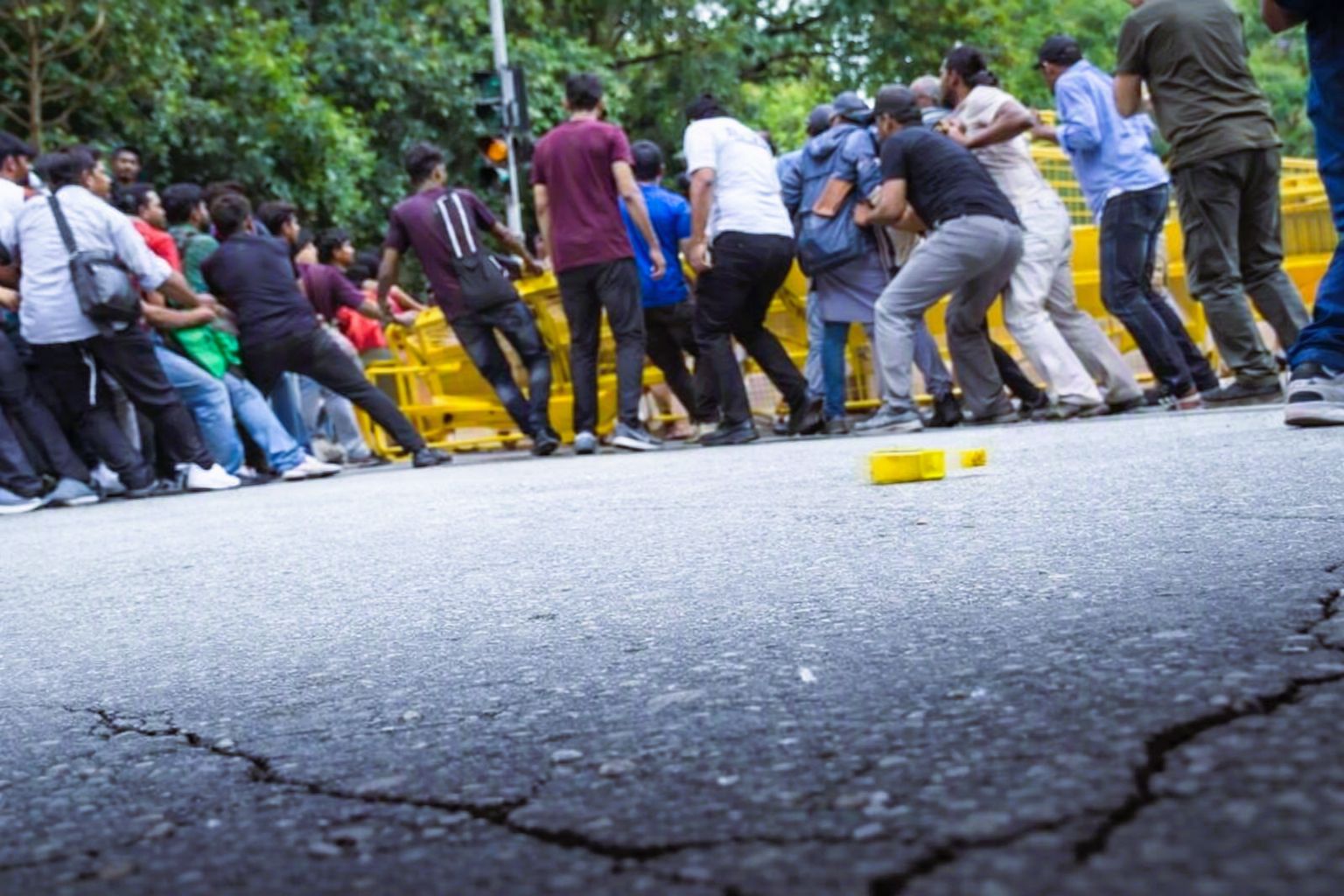
Conspiracy shadows CJP’s Parliament march violence—Probe tightens after 118 police personnel injuries

New Delhi, July 21: On the first day of the monsoon session of Parliament, a massive uproar occurred in the capital Delhi during the CJP’s “Sansad Chalo” march. Violent clashes broke out at several places between protesters moving from Jantar Mantar towards Parliament and the police. Following incidents of stone-pelting, barricade-breaking, and vandalism on Janpath, Raisina Road, and Parliament Street, the police had to resort to lathicharge and tear gas. After a day-long uproar, the police removed the protesters from Jantar Mantar, but they returned late in the evening.
Meanwhile, CJP founder Abhijeet Dipke announced that the protest and Parliament march would continue on Tuesday.
The crowd of protesters and their supporters, which had been gathering in and around Jantar Mantar since the previous night, swelled to around 16,000 by Tuesday evening. The protesters chased police officers away throughout the day. By late evening, a crowd of over four thousand suddenly gathered near the NDMC building. Despite repeated police requests to clear the road, the protesters became increasingly agitated. Meanwhile, protesters also threw water bottles at police teams.
Earlier on Monday, despite repeated warnings and legal instructions, the protesters violated Section 163 of the Bharatiya Nagarik Suraksha Sanhita (BNSS) . The crowd pelted stones at police, attempted to break barricades, and damaged public property.
The Delhi police claimed that 15 to 20 government vehicles were damaged during the violence, while several shops in the Janpath area were also vandalized. More than 118 police personnel were injured in the violence. These include the Special Commissioner, Joint Commissioner, Additional Commissioner, DCP, Additional DCP, and ACP-rank officers, along with more than five IPS officers. Several female police officers were also injured.
Around 60 protesters were also reported injured. An injured police officer deployed at the scene stated that stone-pelting suddenly began near the Claridges Hotel. He stated that the stones appeared to have been pre-arranged, and after the protest ended, the remaining crowd resorted to premeditated violence.
Following the violence, police detained around 70 people. Sources indicate that many of those detained are not students. Consequently, the police are investigating the incident from the perspective of a conspiracy. FIRs are being filed against the accused under various sections of the Indian Penal Code (IPC). CCTV footage, social media posts, and mobile videos are also under scrutiny.
Meanwhile, amid the chaos on the streets, discussions continued. CJP representatives Sourav Das and Ashutosh Ranka met Union Minister J.P. Nadda twice. In the first meeting, the minister sought details of their demands, while in the second, the representatives submitted a written memorandum. However, no immediate assurances were given by the government on any of the demands. JP Nadda appealed to end the agitation and maintain peace.
According to government sources, Union Home Minister Amit Shah was closely monitoring the entire incident. Delhi Police and paramilitary forces were instructed to use minimal force to control the situation. Despite this, police action was required when the situation escalated. A detailed investigation into the violence in the capital is underway, and police say they will identify the culprits and take strict legal action against them.
Tags:

Related Post