



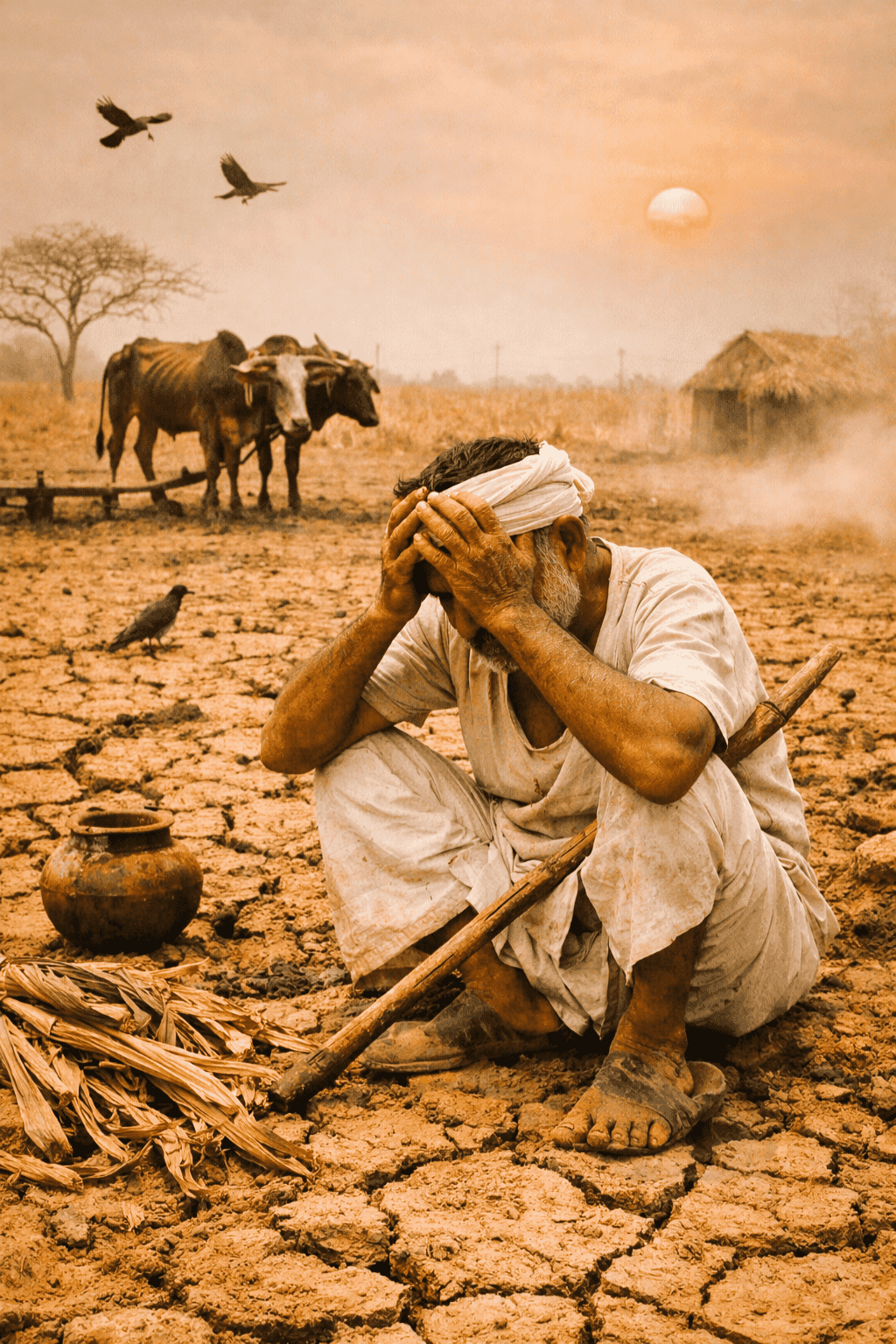
El Niño hits 315 districts across 12 states; Centre orders immediate action

New Delhi, June 23: In view of farmers’ concerns over El Nino and the weak and uncertain monsoon, the Agriculture Ministry has intensified its preparations for the Kharif season. On Tuesday, Union Agriculture, Farmers Welfare and Rural Development Minister Shivraj Singh Chouhan held a high-level virtual meeting with state agriculture ministers, senior officials, district collectors, experts from ICAR, ICAR-Krida, and IMD to review the situation across the country.
In a press conference following the meeting, Union Agriculture Minister Shivraj Singh Chouhan stated that this year’s monsoon is running much later than normal, with approximately 43 percent less rainfall recorded so far. According to the Meteorological Department’s forecast, rainfall is likely to remain weak in the week leading up to July 2nd. This directly means that Kharif crops could be affected, especially in areas where agriculture is entirely dependent on the monsoon.
Anticipating this potential risk, the central government, under the leadership and guidance of Prime Minister Narendra Modi, has been preparing for several days.
Shivraj Singh stated that the Ministry of Agriculture and the Indian Council of Agricultural Research (ICAR) jointly assessed 315 districts, based on scientific data, where the risk of low rainfall and lack of irrigation is high. Approximately 315 districts are expected to experience a weak monsoon.
Of these, 111 districts are high-priority, with irrigation coverage below 25 percent. 76 districts are medium-priority, with irrigation coverage ranging from 25–50 percent. 128 districts are low-priority, with relatively better irrigation through dams and other sources. A significant portion of these districts are concentrated in 12 states: Madhya Pradesh, Maharashtra, Gujarat, Uttar Pradesh, Rajasthan, Karnataka, Bihar, Jharkhand, Telangana, Andhra Pradesh, and Odisha. The meeting discussed the issue in detail with the Agriculture Ministers and District Collectors of these states, urging them to accelerate local preparedness.
Union Minister Chauhan informed that ICAR and ICAR-CRIDA have prepared District Agricultural Emergency Plans for all districts. These plans, based on each district’s climate, cropping patterns, water resources, and risks, provide clear measures, including: alternative crops to be grown in the event of low rainfall, crop rotation strategies, how to best utilize available water, and how to create new income options while reducing risks. These measures should be immediately reviewed and updated according to local conditions, and maintained as an “operational plan,” so that they can be implemented without delay as needed.
Union Minister Shivraj Singh Chouhan stated that at this time, “every drop of water is precious to us,” and planning is being done with this in mind. States have been directed to immediately repair and strengthen structures such as ponds, reservoirs, drains, farm ponds, check dams, stop dams, and sack bunds. Water conservation and water harvesting should be prioritized in MNREGA and future rural development programs, such as the “Viksit Bharat G Ram G”, to generate employment and increase water storage capacity.
Union Minister Shivraj Singh Chouhan stated that there are 731 Krishi Vigyan Kendras (KVKs) in the country, which are the main link for providing technical advice and seed and crop management information to farmers. KVKs and agro-meteorological advisory units have been directed to work closely with districts and provide continuous guidance to farmers regarding the potential impact of El Niño and a weak monsoon. Instructions have been given to utilize agromet advisories, SMS and WhatsApp messages, call centers, radio and TV, and social media platforms to disseminate information.
Shivraj Singh Chouhan stated that if the monsoon is very weak, a fodder crisis is possible. In view of this, advance supply plans are being made from districts or states with adequate fodder availability to areas with shortages. Fodder stocking, alternative fodder sources, and supply chains are being planned in advance to prevent unexpected difficulties for livestock farmers. The central and state governments will jointly strengthen monitoring mechanisms to prevent fodder black marketing and hoarding. Shivraj Singh Chouhan clearly stated that mere crop and water preparation is not enough; farmers’ financial security is equally important. There is an emphasis on expanding the coverage of the Pradhan Mantri Fasal Bima Yojana in potentially affected districts so that farmers can receive timely compensation in the event of crop loss. Instructions have been given to expedite the process of issuing Kisan Credit Cards for farmers who do not currently have them so that they have adequate resources in case of seed damage, re-sowing, or other investments.
The Union Minister stated that weekly reviews are being conducted at the secretary level, and he himself reviews the El Niño situation on Tuesdays. He urged farmers not to panic, but to be prepared. And collective action is needed.
Tags:

Related Post