




“This Indian prevented 9/11”—Modi echoes global praise for Captain Machchhar

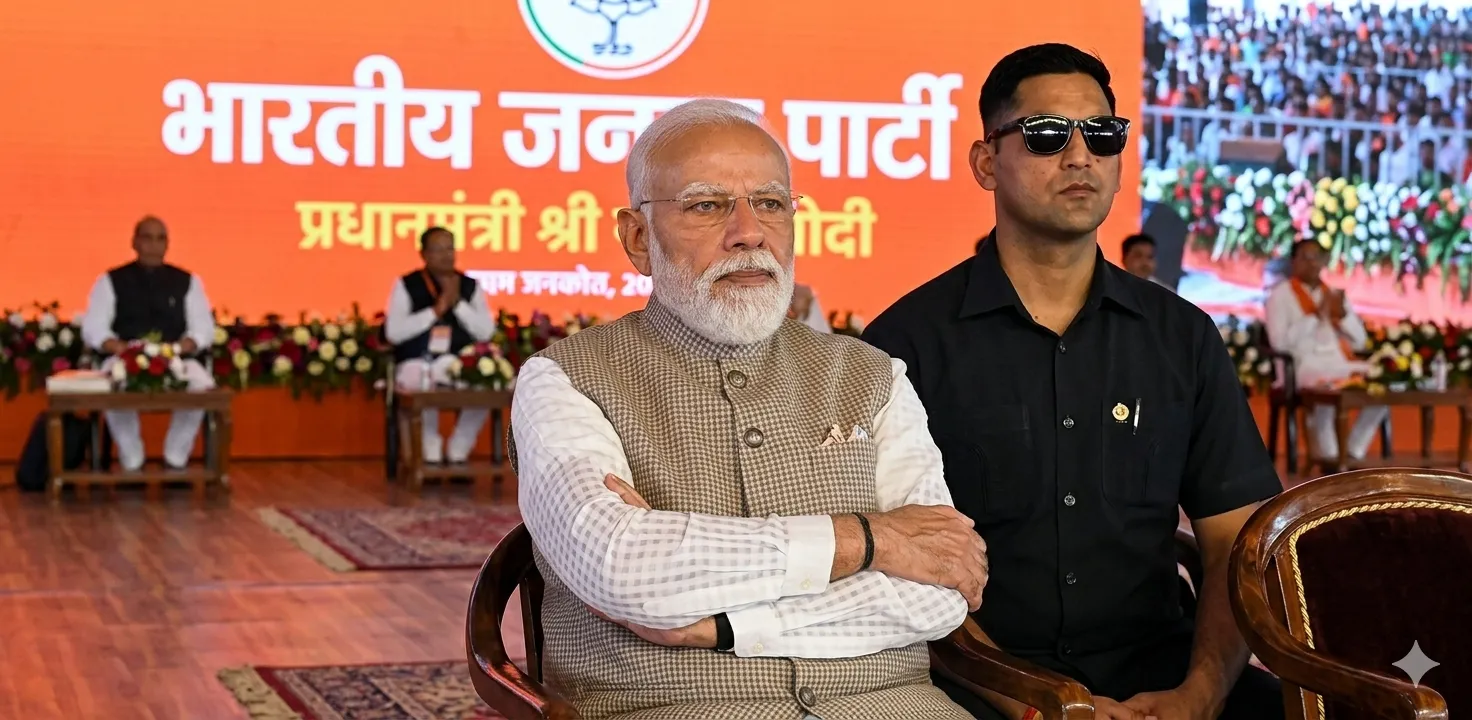
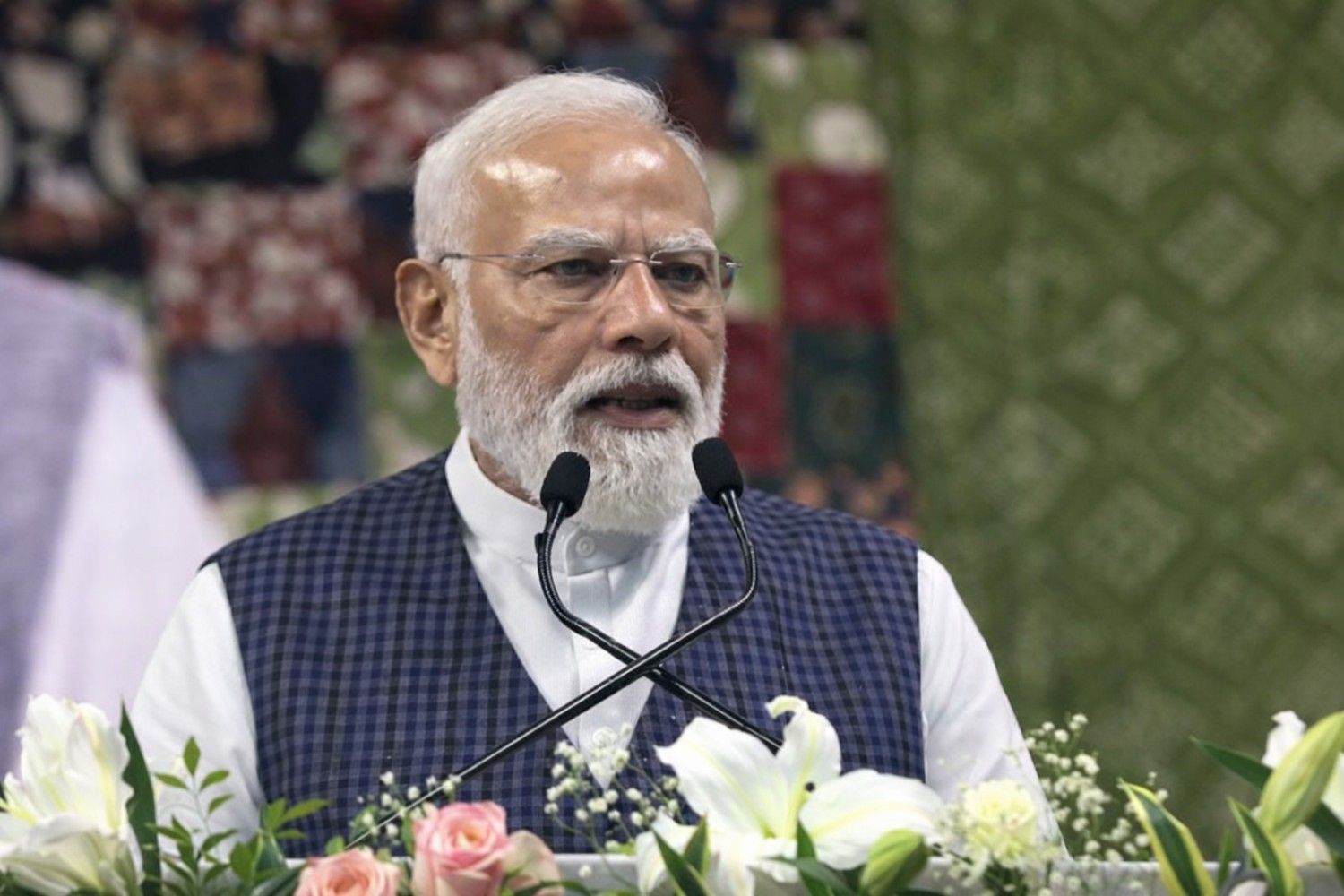
New Delhi, October 01: Prime Minister Narendra Modi on Thursday praised the courage and presence of mind of Captain Smit Machchhar, saying that his bravery has filled every citizen of the country with pride. Addressing the centenary celebrations of the Union Public Service Commission (UPSC), Modi said that even the Israeli Prime Minister has said that “this Indian prevented 9/11 from happening.”
Captain Smit Machchhar was seriously injured when the co-pilot allegedly tried to crash the FlyDubai flight from Dubai to Tel Aviv. Despite this, he displayed patience and presence of mind and helped open the cockpit door, after which the attacker was overpowered. The plane landed safely in Tabuk, Saudi Arabia.
Modi said, “This feat of Smit fills every citizen of the country with pride.” He added that he has also spoken to Smit’s father, Bhupendra Bhai, mother, Geeta Bhabhi, and wife, Sonal. The Prime Minister appealed to the countrymen to pray for Captain Smit’s good health and to congratulate “Brother Smit, who has brought pride to India.”
At the ceremony marking the 100th anniversary of the UPSC, Modi said that this day is not only a celebration of the Commission’s 100 years but also a celebration of its legacy. He said that it is a celebration of the aspirations of millions of young people who dream of joining the public services every year and the trust that every Indian has in this institution. On this occasion, the Prime Minister released the UPSC’s centenary commemorative coin and postage stamp.
He said that in the 100-year journey, generations have changed, governments have changed, technology has changed, and curriculum has changed, but the trust in the UPSC remains unwavering. Referring to the UPSC exhibition, Modi said that Subhash Chandra Bose also went through the same process in 1920. At that time, the British ruled, but the exam included a Sanskrit paper, and Subhash Babu took the exam in Sanskrit.
The Prime Minister said that after independence, Sardar Vallabhbhai Patel faced not only the challenge of keeping a country free but also of running a nation. Sardar Patel provided the skills infrastructure needed for national reconstruction and made the UPSC a key pillar of independent India. He said that the UPSC is an important source for the kind of governance and administration the country needs.
Modi said that the youth being selected today will play a crucial role in building a developed India and will also be the biggest beneficiaries of a developed India. He said that two criteria must always be kept in mind in the selection process: “Nation First” and “Citizen First.” He said that every selection should be judged on these two criteria.
The Prime Minister said that the public service should attract young people who are attracted not to “public office” but to “public service.” Therefore, recruitment exams should not only assess a candidate’s knowledge but also their reasons for joining the civil service. He said that professionals are needed who have the sensitivity to understand the suffering of the poor, the ability to innovate to solve problems, and an understanding of the nation’s needs.
Modi said that the country has moved beyond the era when the government was considered “mother and father.” Today, the governance mantra is “Nagarik Devo Bhava,” meaning that citizens are no less than gods for them, and serving citizens is paramount. He said that 21st-century India is moving forward with a new work culture of “people-centric, proactive, and good governance.”
He said that public servants, while ensuring compliance with laws, should also understand whether a particular law is useful to the people. The Prime Minister said that the country is rapidly moving forward on the “Reform Express,” and therefore, the institutions conducting examinations must also make reforms in accordance with the country’s needs.
Modi said that examinations should not be considered merely a mere event, as they are linked to the future of the youth. He added that even a few months’ delay in the examination can create difficulties for the youth. Therefore, the principle of “time certainty” should be followed in the examination system.
The Prime Minister also emphasized capacity building of the UPSC and State Public Service Commissions. He said that this work should continue continuously. The iGOT platform created under Mission Karmayogi can also be used to enhance the internal systems of the commissions and the capacity of the teams working with them.
He said that the work of the UPSC is linked to the future of the youth and the Commission is an important pillar in the mission of building “National Power from Youth Power.” Modi said that the 100-year journey of the UPSC also reflects its contribution to the country’s administrative system and the trust it enjoys.
Tags:
Related Post