




Trump, Pezeshkian ink Islamabad MoU between USA and Iran

Paris (France), June 18: An important diplomatic development has emerged towards reducing tensions in the Middle East (West Asia). Preliminary agreement has been reached on the draft of the proposed peace agreement between the US and Iran. The draft includes several important provisions such as stopping military activities, ensuring security of sea routes, relief from economic sanctions, cooperation in Iran’s reconstruction, and monitoring of its nuclear program.
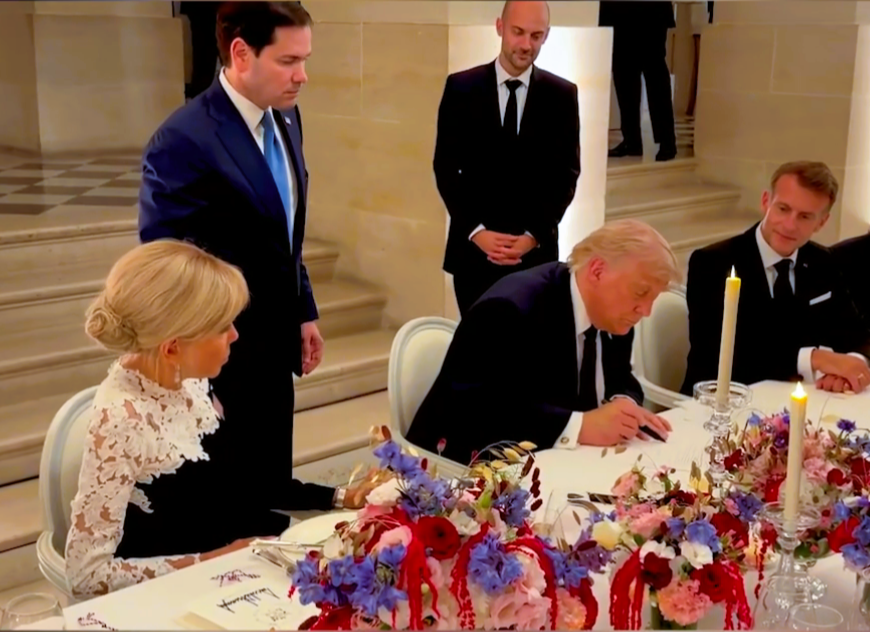
According to a senior US official, President Donald Trump and Iranian President Masoud Pezeshkian officially signed the draft US-Iran agreement during a dinner held at the Palace of Versailles in France on Wednesday evening.
The White House and Fox News, on their X handles, first confirmed the news, which then spread like wildfire across the world. According to reports from Iran’s Press TV, Gulf News, Al Jazeera, CNN, Time magazine, and CBS News, the agreement includes the opening of the Strait of Hormuz, sanctions relief, negotiations on the nuclear program, and steps toward a final agreement within 60 days. Trump and the Iranian president reportedly signed the document during their meeting with French President Emmanuel Macron in Paris. The agreement comes into effect immediately.
The US has released the document as the “Islamabad Memorandum of Understanding between the United States of America and the Islamic Republic of Iran.” A senior US administration official stated that the main objectives of the agreement are to immediately open the Strait of Hormuz, resolve issues related to Iran’s enriched uranium stockpile, and establish a framework for phased sanctions relief.
Iran’s Foreign Ministry spokesman, Esmail Baghaei, confirmed that the two sides have finalized and signed the draft agreement. He added that consultations on this issue had been ongoing for a considerable period with Oman and other countries. Additionally, agreement was reached on most issues related to the management of the Strait of Hormuz. Baghaei stated that safe passage of ships through the sea route will now be ensured. The Islamic Republic of Iran’s sovereignty and rights over the Strait of Hormuz will be protected.
14 points of the draft:
1. All forms of conflict will cease: The United States, Iran, and their allies have pledged to immediately cease all military operations and not to initiate war or military action against each other in the future. This includes conflicts involving Lebanon. Lebanon’s sovereignty and territorial integrity will be respected.
2. Respect for each other’s sovereignty: Both countries will adopt a policy of non-interference in each other’s independence, territorial integrity, and internal affairs.
3. Aim for a final agreement within 60 days.
4. Lifting of the US naval blockade: This stipulates that the US will begin the process of lifting the naval blockade and other restrictions imposed on Iran upon signing the MoU. The goal is to completely lift it within 30 days.
5. Strait of Hormuz: Iran will provide free and safe passage to commercial vessels between the Persian Gulf and the Sea of Oman for 60 days. Traffic is planned to return to normal within 30 days after removing technical and military obstacles and clearing sea mines.
6. A $300 billion economic plan for Iran.
7. A roadmap for lifting sanctions will be developed.
8. Iran has reiterated its non-pursuit of nuclear weapons. The two countries will discuss in detail the disposal of enriched nuclear material, uranium enrichment, and other nuclear requirements as part of the final agreement.
9. The status quo will be maintained during the negotiations.
10. Immediate relief for oil exports: Upon entry into force of the MoU, the US Treasury Department will issue special exemptions for Iranian crude oil, petroleum products, and related banking, insurance, and transportation services.
11. The US has agreed to make Iran’s frozen or restricted assets and funds available for use.
12. Monitoring Mechanism: A special executive mechanism will be established to ensure the agreement’s effective implementation and future compliance.
13. Formal negotiations on a final agreement will begin.
14. The final agreement will be legitimized through a binding UN Security Council resolution.
Tags:
Related Post