





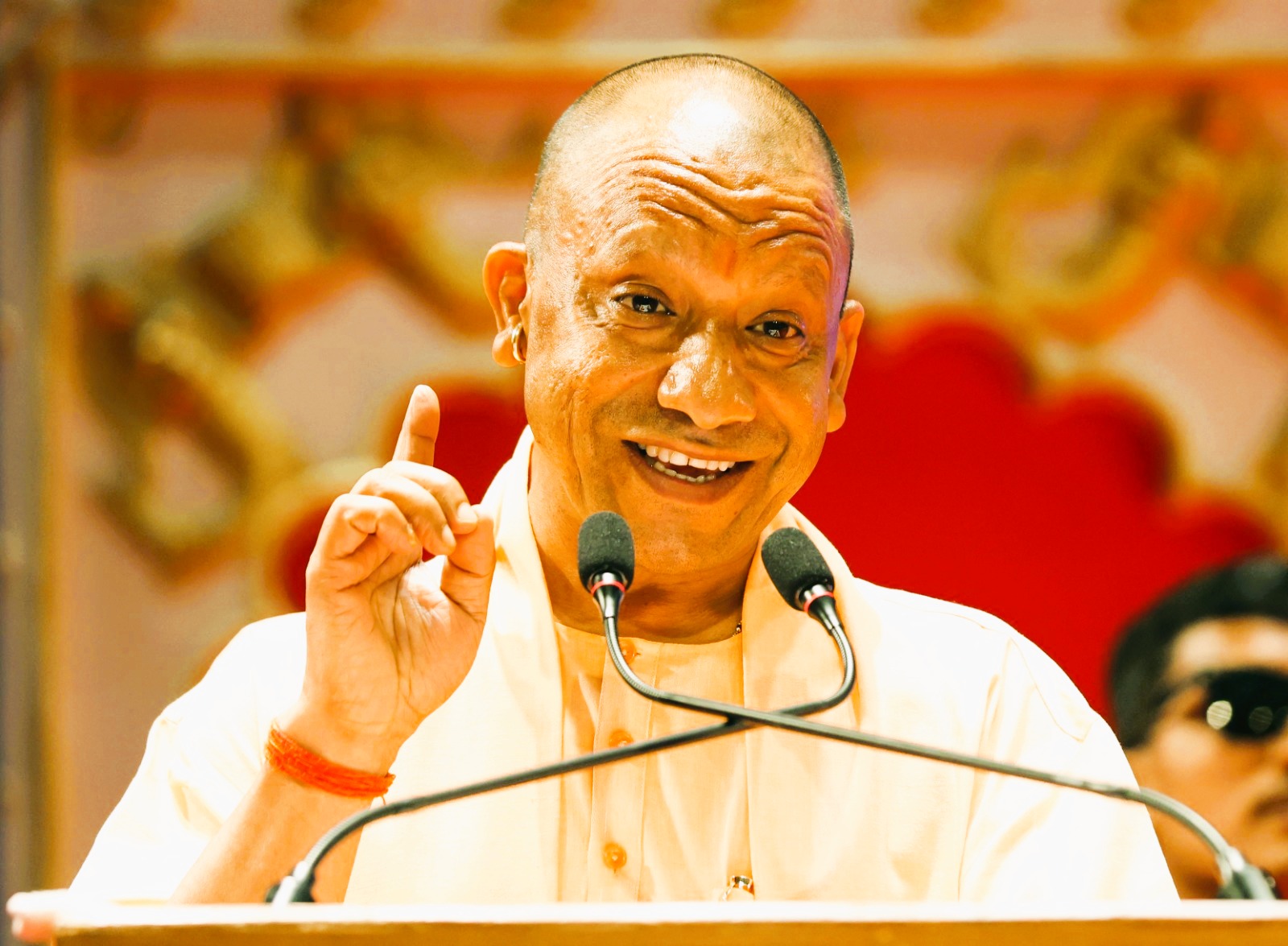
Adityanath at RML Law University convocation: Mafia rule ended, ‘rule of law’ restored

Lucknow, October 17: Uttar Pradesh Chief Minister Yogi Adityanath, while participating in the convocation ceremony of Dr Ram Manohar Lohia Law University, asserted that his government ended the mafia’s dominance before 2017 and established the honest ‘rule of law,’ declaring that no one can now challenge the state’s law and order; Supreme Court Justice Vikram Nath also shared his views, while 260 students received degrees and meritorious achievers were honored.
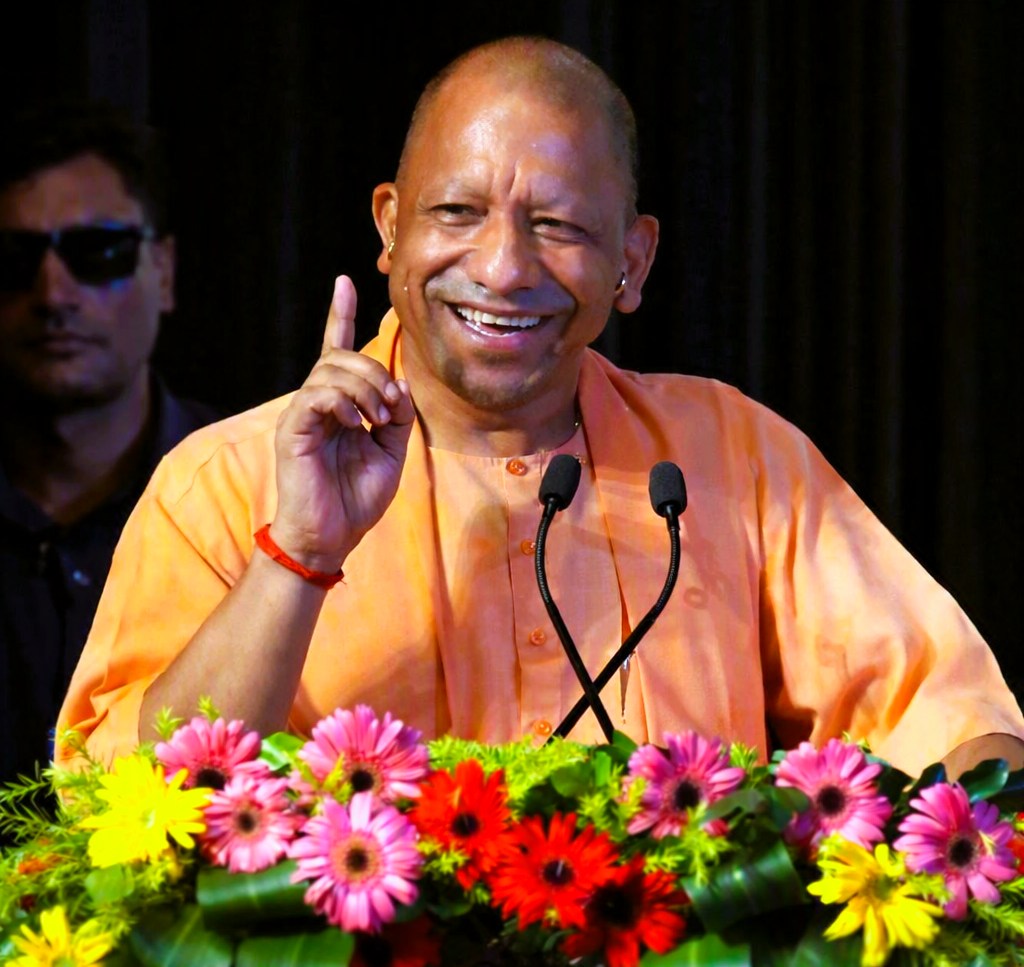
Chief Minister Yogi Adityanath, referring to the mafia rule of previous governments at the fifth convocation of Dr. Ram Manohar Lohia National Law University held on Saturday, said that there was a time in the state when no law was applicable to the mafia. The situation was such that even the Chief Minister, Governor, and Judge were irrelevant to him.
Chief Minister Yogi said that when a mafia convoy passed, it was given the first path. Whatever land it set foot on became its own. We have established the rule of law in the state. He said that no person or position can be above the Constitution.
He also taught students to stand up against injustice, stay connected to their roots, and continue studying. He urged them to contribute to resolving land and family disputes in villages. They should not compromise on their principles when pressured to do wrong. He told students to have the actions, dignity, and words of Ram, a heart like Krishna, a mind like Shiva, and to speak the truth as a dharma (righteous conduct).
Yogi said that before 2017, the perception about the state was that investment was unsafe, connectivity was weak, and development prospects were limited. Everyone believed that Uttar Pradesh could not improve. To change this perception, willpower and a result-oriented action plan were necessary. Establishing the rule of law in the state is an important part of this transformation. We have established the rule of law by freeing the state from mafia rule. Previously, even convoys of people holding administrative and constitutional positions would be stopped in front of a mafia in Prayagraj. However, now, under the rule of law, the state is establishing new dimensions of development.
Chief Minister presented this convocation as a hypothetical case, stating that if ‘Developed India 2047’ is a case, then 1.4 billion Indians are its petitioners, and young jurists are their advocates. This case will require facts, evidence, logic, and honest advocacy. Its defendant is not any individual or political party, but the status quo mindset that refuses to accept that change is possible.
Chief Minister Yogi Adityanath stated that the country’s independence, the enactment of the Constitution, the Emergency, historic judiciary decisions, and reforms in the country can be seen as significant milestones in our journey. The country gained independence on August 15, 1947, and the Constitution came into effect on January 26, 1950. The imposition of the Emergency on June 25, 1975, clarified the difference between the “rule of law” and the “law of the ruler.” The reform process gained momentum after May 2014. More than 1,500 obsolete laws were abolished. Through the Public Trust Act, minor lapses in 183 provisions of 42 laws were decriminalized. Citing the Insolvency and Bankruptcy Code, GST, changes related to Article 370, and the Nari Shakti Vandan Act, he said that reform does not only mean creating new laws, but also removing old laws that have lost their relevance.
Chief Minister stated that in 2013, India was considered one of the world’s five fragile economies, but today it is among the top five. This transformation has strengthened global confidence in India. Similarly, Uttar Pradesh now aims to achieve a $1 trillion economy. A vision document has been issued and an action plan has been implemented. He expressed confidence that this goal will be achieved by 2029-30. He stated that maintaining the rule of law, fairness, and public trust is essential to achieving the state’s economic progress and development goals. Respecting victims and ensuring access to justice are key pillars of this confidence.
Regarding the role of technology and artificial intelligence (AI), the Chief Minister stated that technology has transformed both crime and evidence. AI has simplified research, data analysis, and the assessment of potential outcomes, but it has also brought new challenges. Through deepfakes, a person’s face and voice can be presented in such a way that the viewer or listener believes it to be real. In such a situation, scientific verification of the authenticity of digital evidence will be necessary. When a criminal based in another country robs a person of their life’s savings in one fell swoop, identifying and apprehending them becomes challenging. In these circumstances, young jurists must develop an understanding of both technology and law.
Yogi Adityanath informed that cyber police stations have been established in all 75 districts of Uttar Pradesh. Cyber help desks have been established in 1,583 police stations across the state. A forensic institute has also been established in the state. Through the AI Pragya program, 1 million youth are being trained in AI, data analytics, and cybersecurity. New criminal laws recognize electronic evidence. Forensic investigation is mandatory in cases carrying a sentence of seven years or more.
Chief Minister said that AI cannot replace the discretion of a judge or a jurist. In the Bhagavad Gita, after imparting knowledge to Arjuna, Lord Krishna leaves the decision-making to his discretion. This sentiment can be described in today’s technological language as “human in the loop.” A machine can offer suggestions, but the final decision must be made by a human. Make AI an assistant, not a charioteer. The charioteer should be your conscience and righteousness. A machine can draft, but the price of its negligence could be an innocent person’s freedom. Therefore, a machine can write code, but a code of conduct must be followed by a jurist.
Chief Minister said that the true test of a developed India is the change in the lives of those at the bottom of society. Mahatma Gandhi expressed this sentiment through Gram Swaraj, and Pandit Deendayal Upadhyaya through Antyodaya. Development should be measured not by the economic status of the highest rung, but by the status of the lowest rung. Goswami Tulsidas’s couplet, “If the king is dear to the people and the people are unhappy, then the king will certainly go to hell” (Narak Adhikari), clearly states that the essence of governance and order lies in public welfare.
Chief Minister’s four requests to young law graduates: First, they should not be silent spectators to injustice, but rather play an active role in establishing justice. Second, they should remain connected to their roots and villages and contribute to the resolution of minor land and family disputes in rural areas. Third, they should preserve their moral character and professional credibility and avoid any unfair compromises or shortcuts. Fourth, they should constantly update themselves on new laws, judicial decisions, and amendments and develop a habit of self-study. Speaking the truth, practicing righteousness, and not being lazy in self-study are the most important life values for any lawyer.
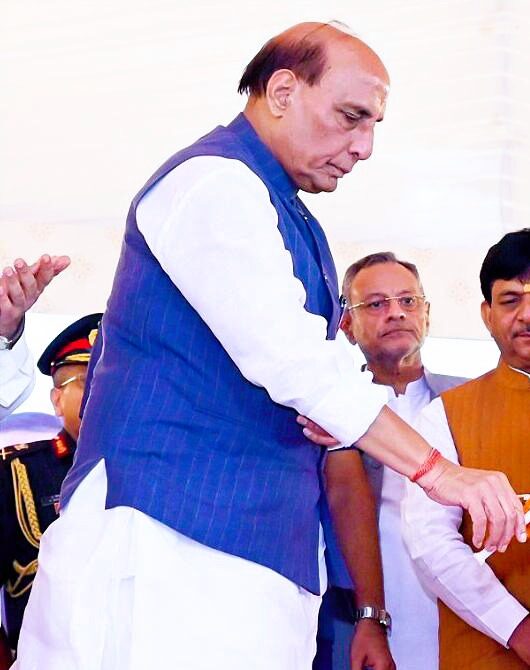
Chief Minister Yogi Adityanath, along with Supreme Court Judge Justice Vikram Nath, Allahabad High Court Chief Justice Arun Bhansali, Higher Education Minister Yogendra Upadhyay, and Vice Chancellor Professor Amar Pal Singh were also present at the ceremony.
Tags:


Related Post